Speed, convenience and control
Value convenient schedules, high service standards and loyalty programs. Communications should connect the offer to time savings and trip organization, rather than abstract comfort alone.
A mixed-method study of airline choice, service and loyalty: six focus groups, a survey of more than 1,200 current and prospective passengers, and five expert interviews.
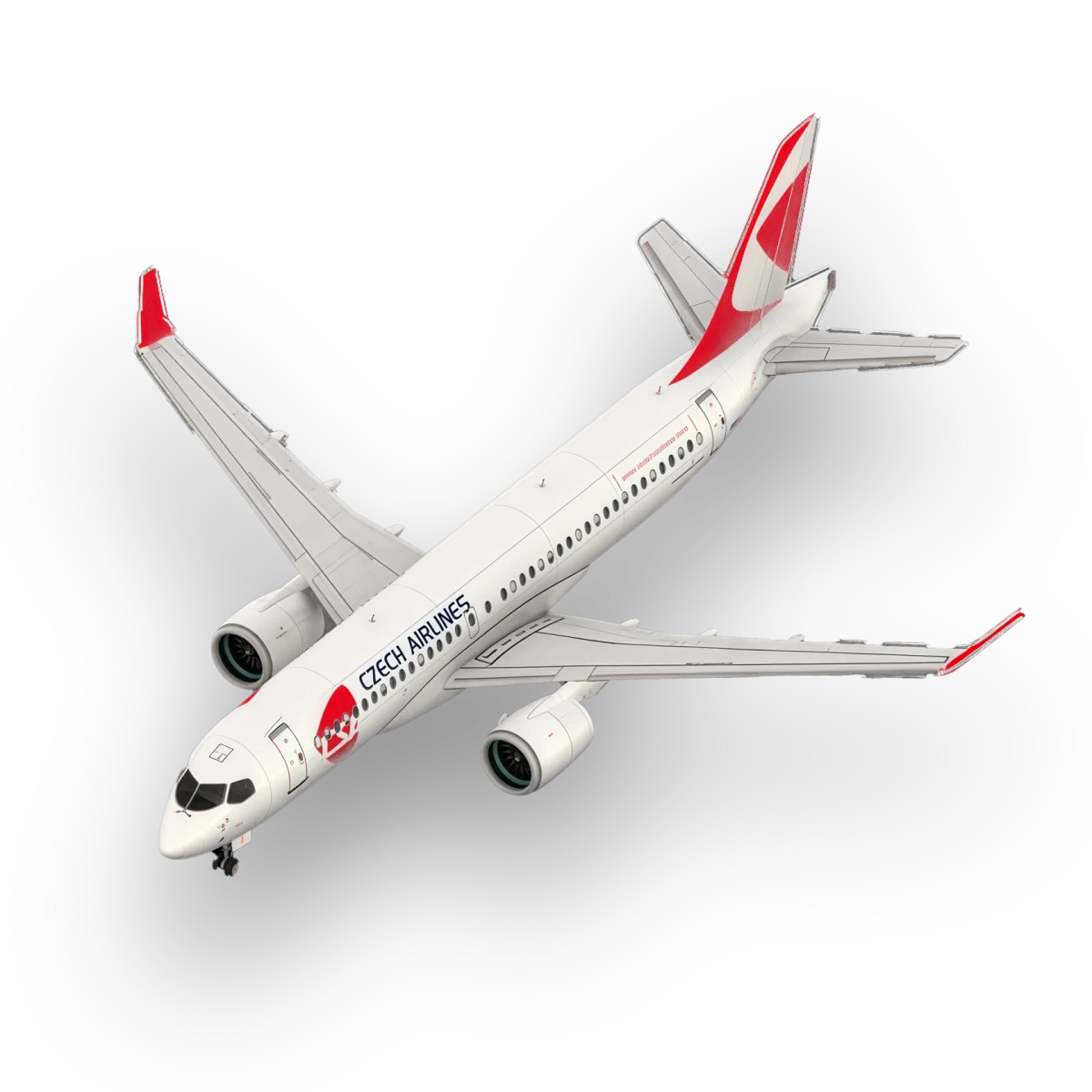
This historical case is set in Prague, Czechia, in 2024. The research concerns the Czech Airlines passenger experience and how the airline could address different audiences more accurately in a competitive European market.
The business question connected service and marketing. Passenger information was fragmented, established communication approaches needed updating and the proposition had to be assessed against market alternatives.
An airline ticket is more than a fare and a destination. Passengers consider schedules, fare conditions, trip preparation, the airport experience, onboard service and support after the journey. A weak link at one stage can reshape their view of the entire service.
The aim was therefore not to collect an isolated wish list. It was to connect choice motivations, travel circumstances and the customer experience to actionable decisions about service, digital products and marketing offers.
For business travelers, schedules and time savings may matter more than a discount. Tourists consider total trip cost and the experience, while families seek predictability and comfort. The research needed to explain these differences without overlooking shared service expectations.
Explore schedules, price, service and rewards. Distinguish basic flight requirements from advantages that help choose between otherwise comparable offers.
Compare business, leisure and family travel needs. Do not treat a person as a permanent segment: the same passenger may travel for work today and with children on holiday tomorrow.
Clarify expectations of the mobile app, online check-in and notifications. Assess each feature against the task a passenger wants to complete before or during the journey.
Understand loyalty programs, rewards, personalized offers and previous experience. Separate an association between membership and repeat purchases from a demonstrated causal effect of the program.
Compare the actual proposition with what passengers notice and understand. Identify the gap between having a benefit and communicating its value.
Connect observations to hypotheses: what to change in a message, digital flow or service, and how to evaluate whether the change helps.
Sessions with business travelers, leisure travelers, families and loyalty-program users explored service expectations, choice motivations and perceptions of previous flight experiences.
Qualitative research explains reasons and context. It does not estimate the percentage of all passengers who hold an opinion.
An online survey of current and prospective passengers covered routes, fares, service, loyalty and digital tools. It provided a quantitative basis for segmentation and satisfaction-driver analysis.
A large sample alone does not establish representativeness. The published materials do not specify sampling procedures, weights or numerical segment-level results.
Reviewing European carriers, including Lufthansa, Air France and Ryanair, provided context on market practices and potential gaps in the customer experience.
Comparing different business models is not a single quality ranking. Fare conditions, route and included services must be comparable.
Aviation analysts and customer-service consultants complemented passenger perspectives with industry trends and possible competitive-development directions.
Expert opinion supports interpretation, but does not replace passenger experience or turn a hypothesis into a measured market fact.
The strength of the approach is the combination of evidence types. Focus groups explain an expectation, the survey supports audience comparisons, competitors provide proposition context and experts highlight industry constraints and opportunities. Agreement across sources strengthens a recommendation; disagreement needs investigation.
The materials identify three profiles by travel situation. This explains differences in needs; it is not a published clustering model with segment sizes or market shares.
Value convenient schedules, high service standards and loyalty programs. Communications should connect the offer to time savings and trip organization, rather than abstract comfort alone.
Focus on fares and bundled offers, and judge the airline through their flight experience. Service and communications should clarify what is included and what costs extra.
Pay attention to children’s needs, comfort and entertainment. Useful information reduces uncertainty before departure and helps them plan the trip.
Loyalty membership is a separate attribute that can apply to all three profiles. The materials describe more frequent repeat purchases and responses to personalized offers among members. This is an observed association: without a separate experiment, the entire effect cannot be attributed to the program rather than travel frequency or other passenger differences.
This analytical framework connects research questions, passenger experience and recommendations. The principles explain how evidence can be interpreted and translated into decisions.
Connect research goals to shared qualitative and quantitative themes: choice motivations, travel context, service experience and digital tasks.
Separate current and prospective customers, travel purpose and loyalty status. Distinguish an actual flight experience from the expectations of someone considering the airline.
Probe specific situations and reasons without suggesting a preferred answer or turning research into a presentation of the company’s advantages.
Use clear time frames and understandable answer options when designing survey questions. Each question needs an analytical purpose; a broad service-liking score cannot replace a task-specific assessment.
Compare responses under relevant conditions: travel purpose, service used, purchase experience and customer status. A group difference calls for explanation rather than automatically demonstrating causation.
For each recommendation, identify the need it addresses, the experience stage it changes and how the team could evaluate the outcome.
This analytical map connects the study themes to journey stages. It is an interpretive framework for prioritizing improvements, rather than a separately measured customer journey map or a published stage-by-stage drop-off analysis.
Present a clear proposition and explain meaningful differences without requiring passengers to assemble information from multiple sources.
Reduce uncertainty about what is included, which options are available and how the offer fits the trip.
Provide a clear next step, timely information and the ability to complete relevant tasks digitally.
Connect communication promises to the experience delivered through personal interactions.
Address differences between business, leisure and family travel while maintaining shared service standards.
Collect passenger experience and use relevant offers rather than sending the same message to everyone.
Convenient schedules are among the factors in airline choice. They should be understood in relation to the purpose of a trip and the passenger’s value of time.
Explain convenience through a travel situation. The same fare can be judged differently under different time constraints and trip purposes.
Ticket cost matters, while leisure travelers also consider bundled offers and the overall flight experience.
Do not reduce the message to a discount. Clarify fare inclusions and relevant options so passengers can compare overall value.
Airport and onboard service affect choice and satisfaction. Families emphasize safety, comfort and children’s services; business travelers emphasize speed and convenience.
Design improvements around use cases. A broad promise of good service needs to become concrete actions at the relevant stage.
Rewards-program users purchase repeatedly more often and respond to personalized offers. The materials also identify insufficient marketing personalization.
Develop offers around passenger circumstances and their relationship with the company. Validate the connection to repeat purchasing before forecasting the impact of a new mechanic.
Travel situations and expectations differ, and a common message does not always explain the value to a particular passenger.
Connect audience, trip context and offer; test the clarity and relevance of alternative messages.
The app and online check-in are part of the passenger experience. A missing capability or an awkward transition adds unnecessary effort.
Prioritize user tasks and test check-in, app and notification flows before expanding the feature list.
Having an advantage does not mean passengers notice it, understand it or consider it important for their trip.
Express benefits through passenger needs, compare alternatives and test messages across audiences.
The study reviewed European carriers including Lufthansa, Air France and Ryanair. The criteria below explain a comparison framework; they do not present unpublished scores or ratings for those companies.
What passengers receive in a comparable fare and which services are purchased separately.
How information search, purchase, check-in and journey support are organized.
How clearly a program communicates value and connects it to the next trip.
Which advantages a carrier explains and how relevant they are to the audience.
Comparisons between network and low-cost carriers need to account for different pricing and fare-inclusion models. A practice is useful as a reference only when its value to the chosen passenger situation is clear.
The four directions below follow the study’s recommendations. The detail explains how to turn them into initiatives and what to evaluate; it does not mean the changes were implemented.
Develop messages for business, leisure and family travelers. Treat loyalty status as an additional attribute rather than a substitute for understanding the need.
How to evaluateTest whether audiences understand the benefit and take the intended next action. The number of messages sent is not an outcome measure.
Improve mobile-app, online check-in and notification flows. Prioritize a clear sequence of actions and useful information at the right moment.
How to evaluateAssess task completion, friction points and requests for help. Evaluate changes through prototypes or limited releases before scaling them.
Develop promotions and reward mechanics with understandable value for different passengers. Consider travel frequency, participation conditions and offer economics.
How to evaluateCompare repeat behavior under comparable conditions and evaluate the cost of the mechanic. Do not attribute differences to the program without accounting for other factors.
Collect feedback after meaningful journey stages, combine it with digital-interaction data and return findings to service and marketing teams.
How to evaluateMonitor recurring issues and changes after improvements. Assign ownership and define how the team will verify that an issue has been resolved.
A proposed follow-up sequence: agree priorities, test hypotheses and establish continuous feedback. Timing depends on the scope of the initiatives and the team’s capacity.
Agree which needs and friction points matter most to the business. Select a limited set of hypotheses and specify evaluation criteria.
Evaluate messages and digital flows with relevant audiences. Distinguish comprehension, usability and commercial outcomes.
Update segments and communications as evidence develops. A study should not replace ongoing observation of the passenger experience.
The study connected choice motivations, audience differences and service gaps into a common picture. Schedules and fares shape choice, the interaction experience supports satisfaction, and relevant offers and understandable loyalty benefits provide reasons to return. The practical result is a set of service, digital and communication directions that a team can translate into testable initiatives.
The figures six, more than 1,200 and five describe the method coverage stated in the case materials. Response percentages, quotas, weights and representativeness parameters are not published. The case does not claim measured sales, conversion or satisfaction improvements after implementation: evidence for those effects is not provided. Recommendations and their proposed validation are distinguished from the research findings.
Combine qualitative and quantitative research, explore the customer experience and turn observations into decisions for product, service and marketing.